Turning field data into decisions that protect public health.
Md. Sakhawat Hossain — Monitoring & Evaluation specialist and health data manager with 16 years across icddr,b, DGHS, and WHO, building DHIS2 surveillance systems and endemicity assesment for Bangladesh's national disease‑elimination programs.
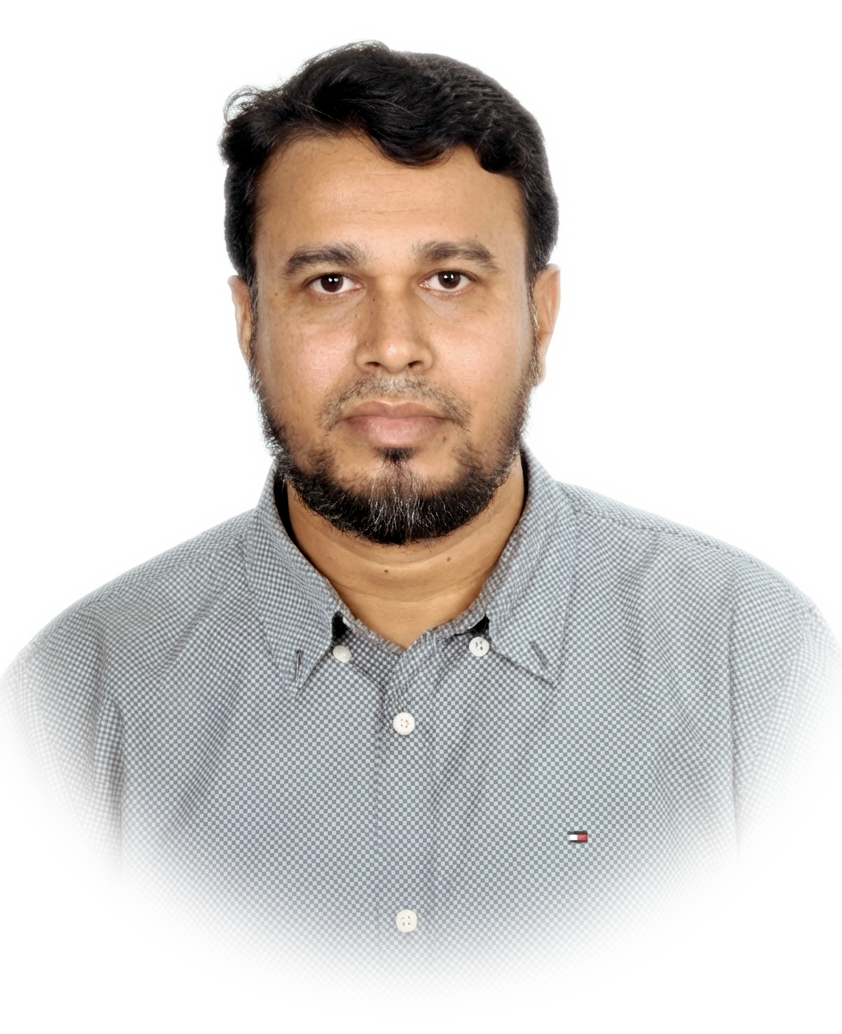
A statistician who chose the field over the whiteboard.
Hardworking and self‑motivated in research, monitoring, evaluation, data science and analytics, and information management. A bachelor's degree and MSc qualification in statistics and over ten years of working experience in the research and development program. A mathematically inclined individual with a penchant for statistics and the ability to find valuable information buried deep in the numbers.
Experience in study design, study survey, data management, subject tracking, baseline survey, program monitoring and evaluation, data analysis, information management, knowledge management, statistics, situation analysis, outbreak investigation, endemicity analysis, cross‑border surveillance, analysis of DHIS2 data, report writing, GIS and producing visual presentations and dashboards of various epidemiological studies and health programs.
Proficient in statistical skills such as building regression models, using predictive models, and quantifying different risks. Assists and facilitates the management of reporting requirements such as national and global infectious disease reports and national reports on the progress of the SDGs.
Quick reference
- Based inDhaka, Bangladesh
- EducationMSc Statistics, Univ. of Rajshahi
- Core platformDHIS2 (Academy L1 & L2)
- Current roleM&E Assistant, NMEP · DGHS
- LanguagesBengali (native), English (professional)
Formal training in statistics, backed by applied platform certification.
Master of Public Health
Atish Dipankar University of Science & Technology (ADUST)
https://www.adust.edu.bd/ ↗Master of Science in Statistics
Rajshahi University, Rajshahi, Bangladesh
www.ru.ac.bd ↗Bachelor of Science in Statistics
Rajshahi University, Rajshahi, Bangladesh
www.ru.ac.bd ↗Professional Diploma — Web Presence Solution & Implementation
IT Scholarship Project Round‑8, under Islamic Development Bank‑Bangladesh Islamic Solidarity Educational Wakf (IDB‑BISEW). Duration: 1 year.
www.idb-bisew.org ↗Certification
Language proficiency
Sixteen years, one thread: better data, better health decisions.
Full job performance detail for each role, from junior programmer to Monitoring & Evaluation Manager, spanning icddr,b, DGHS's National Kala‑azar and Malaria Elimination Programs, and the World Health Organization.
- Support to develop Early Warning and Alert Response System (EWARS) for Malaria, Dengue, Acute Watery Disease (AWD), TB and others.
- Support API integration from DHIS2 to the EWARS system.
- Provided support to strengthen the project's Monitoring and Evaluation (M&E) system.
- Participated in the development and implementation of the project's M&E framework.
- Worked under the guidance of the Program Operations Advisor and program personnel to harmonize and standardize data collection, analysis, and reporting systems in line with program indicators.
- Supported the regular review of field activities to assess the utilization and impact of monitoring tools.
- Measured program quality improvements and provided timely feedback to field‑level staff and implementing partners.
- Comprehensive desk review of various global, regional and country documents including strategic plans, guidelines, reports, published studies etc. and records to analyse Kala‑azar situation and local transmission.
- Reviewed existing data on Kala‑azar cases in Bangladesh, including geographical distribution, trends over time, and case demographics.
- Developed protocol/SOP/methodology for endemicity assessment in consultation with NKEP, WHO and other relevant stakeholders — clear, transparent, and replicable.
- Reviewed existing criteria and applied standardized criteria to classify upazilas into different endemicity levels for Kala‑azar; reviewed, validated and analysed DHIS2 data and data from other sources on case, vector, ecology etc.
- Assessed the factors contributing to variations in endemicity across different upazilas; developed tools for obtaining necessary information and interviewing relevant stakeholders and Kala‑azar patients for endemicity decision‑making.
- Collected necessary information and data on Kala‑azar endemicity from various sources and analysed the collected data to understand endemicity, spatiotemporal distribution, trends over time, and patient demographics.
- Conducted spatial analysis to identify geographical clusters of Kala‑azar cases.
- Visited Kala‑azar endemic/non‑endemic upazilas, health facilities and places as required to collect and verify information regarding Kala‑azar endemicity.
- Utilized appropriate statistical methods to assess Kala‑azar endemicity at upazila level, and identified factors (socioeconomic conditions, environmental factors, vector ecology, and access to healthcare services etc.) associated with endemicity.
- In consultation with NKEP and WHO, revised endemicity of Kala‑azar based on the information and data available.
- Facilitated consultative meetings/workshops with stakeholders at the national level to revise endemicity of Kala‑azar and incorporate stakeholder recommendations into the finalized revised endemicity.
- Documented methodology and steps followed to revise endemicity of Kala‑azar and prepared the final report on methodology and revised endemicity, submitted to NKEP and WHO.
- Ensured program quality by providing technical and managerial support to achieve goals.
- Created/updated M&E frameworks, toolsets, plans, and guidelines in alignment with strategy.
- Provided on‑the‑job support, coaching, mentoring, and guidance to project staff and partners for effective task execution.
- Gathered data and delivered analysis, interpretation, evaluation, and reporting with recommendations to maintain project progress.
- Led effective disease surveillance, investigation of outbreaks, investigation of cases, cross‑border surveillance, and endemicity assessment.
- Reviewed, validated and analysed DHIS2 data and data from other sources.
- Monitored the project regularly to enhance M&E components, supported authorities with findings, and conducted frequent field visits in Kala‑azar endemic/non‑endemic upazilas regarding patient information.
- Developed guidelines/strategies/protocols and SOPs for the National Kala‑azar Elimination Program.
- Ensured effective knowledge management, reflection, and learning mechanisms among Principal Recipient (PR), Sub‑Recipient (SR), and Sub‑Sub‑Recipient (SSR) teams.
- Documented procedures, lessons learned, and best practices, and prepared monthly, quarterly, annual, and completion reports, strategies, guidelines and SOPs.
- Conducted data analysis of patient information by SPSS/STATA and spatial/GIS analysis to identify geographical clusters of Kala‑azar cases.
- Carried out other duties as assigned by LD‑CDC through PM‑M&PDC and DPM‑NKEP.
- Managed data entry, editing, and reporting, ensuring all forms of data were properly administered.
- Coordinated routine data entry for the project, maintaining security for survey and field data.
- Conducted data consistency checks, cleanup, analysis, and documentation of data sets.
- Led disease surveillance, investigation of outbreaks, and investigation of cases.
- Developed software for data entry tasks, created database scripts, and generated graphs and slides for reports.
- Reviewed field data for errors, performed database backups, updated the record management system and produced summary reports.
- Made frequent field visits to Kala‑azar endemic/non‑endemic upazilas, health facilities and places as required to collect and verify information regarding Kala‑azar patients.
- Created/designed a web‑based surveillance system on the DHIS2 platform for real‑time Kala‑Azar data collection within the MIS government system.
- Developed functionalities for generating patient discharge certificates, follow‑up cards, event reports, pivot tables, GIS maps, and custom reports based on program needs.
- Prepared training materials for GoB personnel on data entry and reporting methods at the upazila, district, and national levels for the Kala‑azar elimination program.
- Collaborated with DGHS surveillance database staff as part of the national VL elimination campaign.
- Planned and coordinated routine data entry, managed various data formats, ensured data management tasks were monitored, and maintained the security of survey and field data.
- Designed and developed user‑friendly, responsive websites and web applications tailored to client needs.
- Cooperated with cross‑functional teams to gather requirements, plan projects, and implement technical solutions.
- Optimized website performance by improving loading speeds, enhancing security measures, and ensuring compatibility across browsers.
- Maintained and updated web content, ensuring accuracy and consistency with branding and design standards.
- Led a team of junior developers, providing guidance, code reviews, and mentorship to ensure high‑quality project delivery.
- Managed data entry tasks, ensuring accuracy and completeness across multiple datasets.
- Conducted data cleaning and validation to maintain data integrity and consistency.
- Assisted in the development and maintenance of databases, including data updates and backups.
- Generated reports and visualizations to support data analysis and decision‑making processes.
- Worked together with team members to troubleshoot data issues and implement effective data management practices.
- Developed and maintained websites by writing clean, efficient HTML, CSS, and JavaScript code, ensuring cross‑browser compatibility and responsiveness.
- Collaborated with designers and senior developers to translate UI/UX wireframes into functional web pages and implement front‑end features.
- Assisted in back‑end development by integrating APIs, databases, and server‑side functionality to ensure seamless web application performance.
- Tested and debugged web applications across various devices and browsers, identifying and resolving technical issues to enhance user experience.
- Stayed updated on web development trends and best practices, applying new technologies and frameworks to optimize website functionality and user engagement.
Where I add value, from study design to dashboard.
Three areas of practice, developed across sixteen years of program‑level M&E and data management work.
Research, M&E & Leadership
- Study design
- Survey
- Data management
- Research
- Monitoring & Evaluation
- Database design
- Team lead
- Questionnaire design
Data Analysis & Information Management
- Data analysis
- MIS
- Information management
- Health Innovation
- Statistical data modelling
- Data‑driven decision
GIS, Visualization & Web
- GIS mapping
- Infographic presentation
- Making public dashboards
- Webpage design and development
Application software
- MS Office package
- Google Forms
- SPSS
- Stata
- Epi‑Info
- Epi Data
- QGIS
- Adobe Photoshop
- EndNote
Databases & Visualization
- MS Access
- MySQL
- Kobo Toolbox
- Open Data Kit (ODK)
- DHIS2
- Google Looker Studio
- Tableau
- XML
- Power BI
Programming & Others
- R
- PHP
- JavaScript
- HTML & CSS
- .NET C#
- VB .NET
- WordPress
- C++
- Python
Documents I helped shape for Bangladesh's Kala‑azar elimination program.
Funded studies I contributed data management and analysis to.
Figures below are the total project value as documented in program records — reference points for the scale of work, not personal compensation.
Objective: To support the National VL Elimination Program of Bangladesh; to conduct studies on impact evaluation of KalaCore activities in Bangladesh, and to investigate access barriers for VL health‑seeking for women, minorities and tribal population.
Role: Data Management, Data Analysis, Capacity building and reporting.
Title: Safety and efficacy of Miltefosine for treatment of children and adolescents with Post‑Kala‑azar Dermal Leishmaniasis (PKDL) in Bangladesh.
Objective: To investigate safety and efficacy of Miltefosine at allometric dosing for treatment of PKDL in children and adolescents in Bangladesh.
Role: Database design, Data Management, Data Analysis and Capacity building.
Objective: To provide technical support to the Communicable Disease Centre, Directorate General of Health Services, Government of Bangladesh for establishing visceral leishmaniasis pharmacovigilance activity in the country.
Role: Database design, Data Management, Data Analysis, Capacity building and reporting.
Title: Improved Visceral Leishmaniasis (VL) Case Detection and Vector Control to Support the VL Elimination Initiative in Bangladesh.
Objective: To investigate efficacy of different active case detection strategies, and safety and efficacy of insecticidal wall paints for controlling sandflies.
Role: Data Management.
Every course, workshop and certification on record.
Sixteen structured trainings across statistics, GIS, DHIS2, data science and disease‑specific epidemiology.
| Training title | Topic | Institute | Year | Duration |
|---|---|---|---|---|
| Data Science & Machine Learning with Python | Python, data analytics with NumPy and Pandas, Machine Learning, data analytics, Time Series, etc. | Ostad.app | 2026 | 6 months |
| Data Analysis Specialization | Introduction to Data Analytics, Statistics for Data Analytics, Data Analytics with Excel & Google Sheets, Power BI, SQL (MySQL/PostgreSQL), Tableau, Exploratory Data Analysis with Python, project with Looker | aiQuest Intelligence — aiquest.org | 2024 | 6 months |
| Post‑kala‑azar dermal leishmaniasis: training of health workers on skin‑NTDs (NTDs‑PKDL) | Introduction to NTDs, skin NTDs and PKDL; epidemiology, clinical presentation and differential diagnosis, diagnosis, treatment monitoring, surveillance, monitoring and evaluation | OpenWHO.org | 2024 | — |
| Neglected Tropical Diseases Monitoring and Evaluation Framework (NTDs‑ME‑framework) | Introduction to the M&E framework; conceptual framework and shifts guiding monitoring and evaluation; quantitative & qualitative approaches to monitoring the road map; evaluation of progress; research agenda for M&E | OpenWHO.org | 2024 | — |
| Health‑care associated infection surveillance (IPC‑HAI‑EN) | Surveillance planning, data collection, analysis, risk stratification methodology, interpretation, communication, evaluation | OpenWHO.org | 2024 | — |
| Response Preparedness for Zoonotic Disease Outbreaks Using a One‑Health Approach | One Health response to zoonotic disease outbreaks; human health and animal health perspectives to One Health | OpenWHO.org | 2024 | — |
| Machine Learning with R | Data processing, data visualization, essential statistics, regression analysis, classification analysis, clustering analysis, association rule learning & time series analysis, advanced machine learning | Thriving Skill, Bangladesh | 2021 | 1 month |
| R Programming | R basics, functions, loops, data manipulation in dplyr, data visualization in ggplot, descriptive statistics in R, classical hypothesis testing, simple & multiple linear regression | Data Science Era, Bangladesh | 2021 | 1 month |
| R Essentials | Basic R, data handling, data analysis, etc. | SRCBD, Bangladesh | 2021 | 12 hours |
| SPSS | SPSS basics, data entry, data transformation, data visualization, descriptive analysis, hypothesis testing, linear regression model | Data Science Era, Bangladesh | 2021 | 45 Days |
| SPSS Advanced | ANOVA, MANOVA, non‑parametric tests, time series analysis, survival analysis, principal component analysis | Data Science Era, Bangladesh | 2021 | 1 month |
| Project Monitoring and Evaluation | M&E methods, tools, indicators, data analysis, M&E framework, M&E logical framework, report writing, M&E challenges etc. | Bangladesh Institute of Management | 2019 | 5 Days |
| DHIS2 Academy Level‑1 | DHIS2 basics, data element, indicator, tracker capture, form development and report generation | HISP India | 2017 | 7 Days |
| Creating a Map using QGIS | Basic QGIS, handling shape files, external co‑ordinates, filtering etc. | Statistical Unit, Training Support Group (TSG) | 2015 | 2 Days |
| Training on Web based Data Management | Data entry, data cleaning, audit log, analysis | CMC, Vellore, India | 2015 | 3 Days |
| Training on Good Clinical Practice | How to manage good clinical practice | icddr,b, Bangladesh | 2015 | 2 Days |
| DHIS2 Academy Level‑2 | Advanced areas of DHIS2, programme development for aggregate and individual data, report format generation | HISP Bangladesh | 2014 | 7 Days |
Peer‑reviewed & preprint research, referenced in full.
Authorship and co‑authorship on visceral leishmaniasis elimination, surveillance and pharmacovigilance.
Organizing & presentation skills
Let's talk data, dashboards or your next survey.
Open to M&E, health information systems, DHIS2 configuration, and GIS/data‑analytics consulting engagements. I certify that the information presented here is true, complete and correct.